China-Linked Hackers Exploit Critical VMware vCenter Zero-Day to Gain Admin Access and Steal Data
Google and Mandiant say China-nexus Armory Castle exploited vCenter flaw CVE-2026-123890 as a zero-day since September to seize admin and ESXi access.
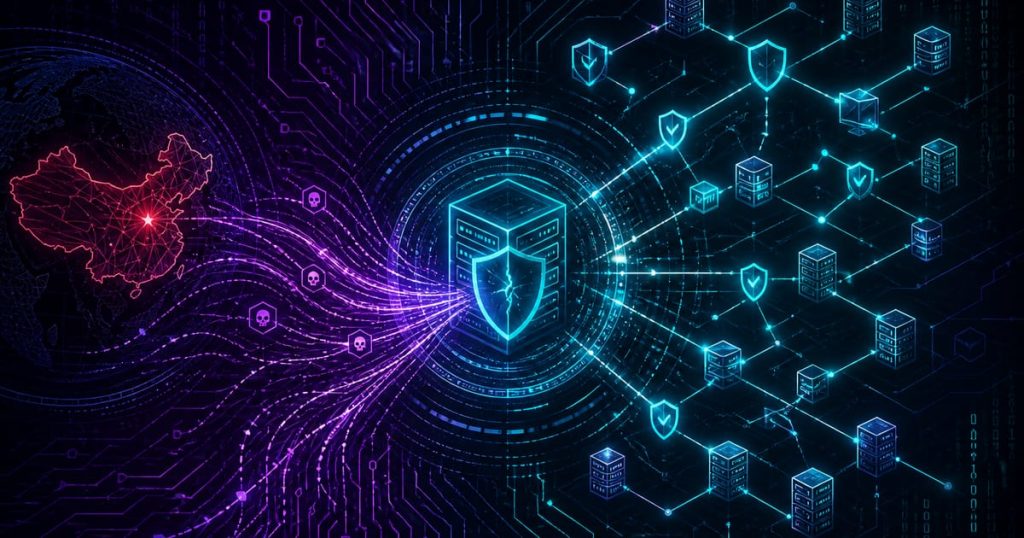
What’s new: The critical VMware vCenter flaw patched on November 19, CVE-2026-123890 (CVSS 9.8), was exploited as a zero-day starting in early September 2026. The Google Threat Intelligence Group and Mandiant attribute the attacks to Armory Castle (formerly UNC5221), a suspected China-nexus espionage group. The bug is an unauthenticated SRP-6a session key disclosure in the VMware Directory Service that hands attackers an authenticated session as administrator@vsphere.local.
What the attackers did
- Used a Go-based exploit tool, BONESAW, to exfiltrate vCenter’s LMDB database, hijack the SAML Security Token Service and create an SSO administrator account.
- Created a local vCenter admin account and enabled SSH through the appliance management (VAMI) API.
- Added an SSH key to the ESXi root account, mounted VMFS volumes and archived and downloaded ESXi data.
- Deployed SAWSNAKE (Golden SAML and MFA bypass), the SLIMSAVAGE and CAGEMATCH JSP web shells, the BEARBONES Dropbear-based backdoor and the LAZYBONES backdoor, which uses Slack for command and control.
- Reached the virtual environment as part of a wider campaign that began with a BeyondTrust Remote Support zero-day (CVE-2026-102764).
Who’s affected
Every unpatched vCenter 8.0, 9.0 and 9.1 deployment, including those embedded in VMware Cloud Foundation, vSphere Foundation and Telco Cloud platforms. Unsupported 6.5, 6.7 and 7.0 releases are presumed vulnerable.
What to do
- Patch now: VCF/VVF 9.1.1.0200 or 9.0.2.0200, vCenter 8.0 U3m (also for Telco platforms), or VCF 5.2.5. vCenter 7.0 customers should contact Broadcom Support.
- Hunt for compromise. Signs include a listener on TCP 33992; port 2012 (SSO control RPC) traffic and scans of ports 9080, 5480 and 2012; an unexpected “sps-…” account under @vsphere.local; PUT requests to
/rest/appliance/access/ssh; unknown keys in ESXi rootauthorized_keys; and Slack traffic from Linux appliances. - Because the attackers took over the SAML token service, patching alone isn’t enough if you find signs of compromise. Treat SSO signing material and admin credentials as compromised and rotate them.
- Patch BeyondTrust Remote Support and related appliances, which formed part of the same intrusion chain.