Why “Zero Data Exfiltration” and One-Scan Compliance May Be the Most Important Security Trend of 2026
Security insights without surrendering your security data: why Zero Data Exfiltration plus one-scan, six-framework compliance evidence is the trend to watch.
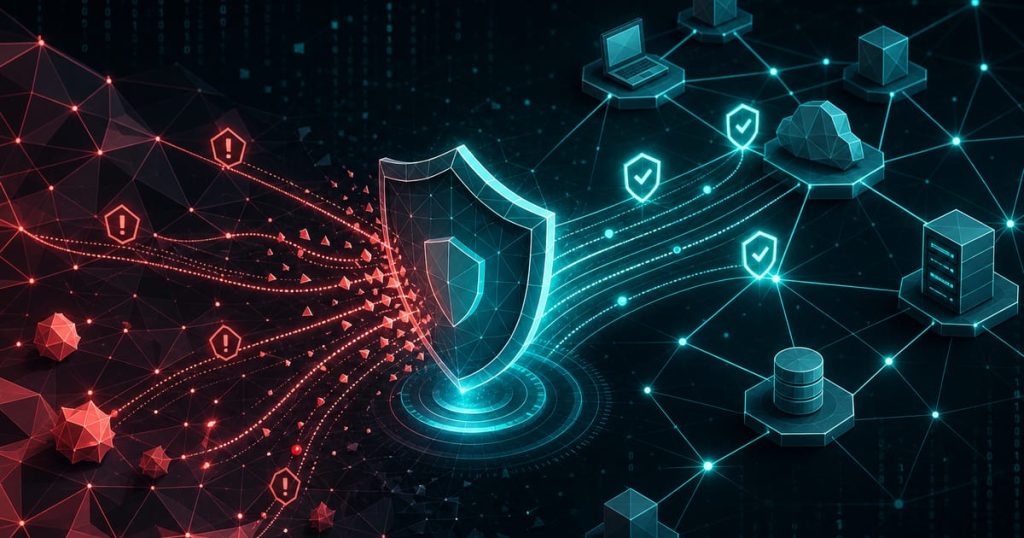
In 2004, Nsasoft released the original Nsauditor Network Security Auditor — one of the early commercial Windows suites that combined dozens of security auditing tools into a single product. Twenty-two years later, the same team has taken that idea much further.
The problem security teams actually have in 2026
Today’s security teams face a growing set of pressures that arrived together:
- Cloud environments span AWS, Azure, and GCP — each with its own misconfiguration surface.
- Compliance requirements keep expanding: SOC 2, HIPAA, PCI DSS, ISO 27001, NIST CSF 2.0, CIS Controls.
- AI is becoming part of every workflow — including security analysis.
- Organizations are increasingly uncomfortable sending sensitive security data to third-party platforms.
Most security products solve only part of this. You can find tools for cloud posture management, vulnerability scanning, compliance mapping, or AI-assisted analysis. But very few combine all of the following in one product:
- Multi-cloud auditing (AWS, Azure, GCP)
- Network security auditing
- Verified findings — probe-based, not assumption-based
- Customer-controlled AI
- Air-gapped and on-prem deployment
- A Zero Data Exfiltration architecture
- One scan mapped to six major compliance frameworks
What one-scan compliance looks like
Instead of running separate assessment cycles for SOC 2, HIPAA, NIST CSF 2.0, PCI DSS, ISO 27001, and CIS Controls, a single scan can generate signed, timestamped evidence artifacts with explicit control mappings, coverage declarations, and remediation guidance.
No screenshots. No spreadsheets. No uploading findings to a third-party cloud. No compliance-evidence scramble before an audit.
The sample scan walk-through shows exactly what this looks like in practice — one scan against a fictional AWS account, with findings routed into auditor-ready evidence packs.
The innovation may not be the AI
For healthcare organizations, payment processors, government contractors, and security-conscious enterprises, the biggest innovation may not be AI at all. It may be the ability to gain security insights without surrendering control of your security data. That is the promise behind Zero Data Exfiltration.
The question isn’t whether AI can help with security. The question is: can AI help without requiring your scan results, credentials, findings, and evidence to leave your environment?
Where to dig deeper
- How to Conduct a Network Security Audit — the 10-step checklist and best practices (with a 6-minute video explainer)
- NSAuditor AI Enterprise — the cloud scanners, hexa-framework compliance engine, and deployment options
- The Enterprise product brochure (PDF) — for procurement, security review, and partners
We’d be interested to hear from compliance teams, auditors, and security engineers: what is currently your biggest pain point — audit preparation time, evidence collection, SaaS data-flow concerns, air-gapped requirements, or multi-cloud complexity?