Google Finds Hackers Using AI Agents to Build and Run Exploits From Software Patches
Google’s threat intel team says attackers now use autonomous AI agent frameworks to reverse patches into working exploits, shrinking time to attack.

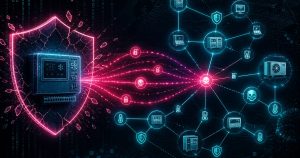
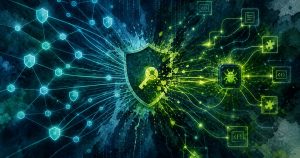
What’s new: The Google Threat Intelligence Group (GTIG) reports that threat actors are using autonomous AI agents and large language models to turn software patches into working exploits and run intrusions at machine speed. According to Google, LLM-driven pipelines let attackers collapse the window between a patch being disclosed and its active exploitation. The report covers financially motivated actors and suspected China-aligned espionage groups, though it names no specific groups.
The tooling
- Multi-agent offensive frameworks: ARTEX, CAIRN, CyberStrikeAI and PentAGI, used to chain complex intrusion steps autonomously.
- ZeroHollow: an inference service used for exploit development and LLM routing.
- Agent Zero: an open-source agent framework with autonomous code execution.
- Jieyou: a Chinese-language phishing platform with an LLM chatbot for building phishing panels.
- APIMart and JetNight: underground proxy services that resell stolen LLM access (LLMjacking).
The main example in the report is the PaperCut NG/MF flaws, which attackers weaponized in September by using LLMs to reverse-engineer the patches.
Who’s affected
Any organization slow to apply security updates, since the gap between a patch and a working exploit is shrinking. Companies running AI infrastructure are also targets, because stolen LLM credentials and cloud resources are being resold.
What to do
- Shorten patch cycles for internet-facing software. Once a patch is public, assume a working exploit will follow quickly.
- Where you can’t patch immediately, reduce exposure and add monitoring for the affected service.
- Protect LLM API keys and cloud AI credentials like any production secret, and alert on unusual model usage or spend.
Note: these steps are our guidance; the GTIG report as covered does not include specific recommendations.