“NSAuditor AI Enterprise 0.32.4 Enhances RDS Security with Critical Audits on Unencrypted Connections and Backup Persistence”
“NSAuditor AI Enterprise 0.32.4 Enhances RDS Security with Critical Audits on Unencrypted Connections and Backup Persistence” — INTRODUCTION TO NSAUDITOR AI E

Introduction to NSAuditor AI Enterprise 0.32.4
The recent release of NSAuditor AI Enterprise version 0.32.4 introduces critical enhancements in the auditing of Amazon RDS (Relational Database Service) and Aurora configurations, with a specific focus on security vulnerabilities associated with unencrypted connections and data persistence. This update addresses key issues related to the RDS Proxy’s handling of the RequireTLS flag, automated backup persistence, and the reporting of encryption compliance across cluster members, ensuring a coherent and thorough security posture for enterprises leveraging AWS services.
RDS Proxy’s RequireTLS Flag and Security Implications
One of the most significant findings in version 0.32.4 is the default setting of the RequireTLS flag in RDS Proxy, which is turned off. This configuration allows the proxy to accept cleartext client connections even when the underlying database enforces SSL. The implications of this setup are considerable, as it opens the door for potential man-in-the-middle attacks and data exposure during transmission. NSAuditor now audits the DescribeDBProxies.RequireTLS setting as a fail-closed HIGH, signaling to security professionals the urgent need to enforce encryption at the proxy layer.
Automated Backups: A Double-Edged Sword
The update also highlights the persistence of automated backups, which can outlive the RDS database or Aurora cluster they protect. When a database is deleted, these backups can be retained or cross-region-replicated, surviving deletion and remaining invisible to both live-resource and snapshot scans. This behavior poses a critical risk, especially if unencrypted backups persist in the cloud, potentially exposing sensitive data at rest. NSAuditor 0.32.4 has introduced capabilities to enumerate these automated backups and flags any unencrypted ones, implementing a fail-closed filter to prompt immediate remediation.
Coherent Aurora Cluster Auditing
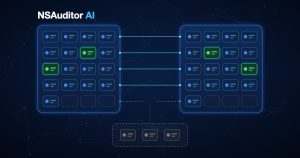
Another key enhancement in this version is the refined auditing process for provisioned Aurora cluster members. Previously, individual member evaluations could yield contradictory findings regarding SSL enforcement and Multi-AZ configurations. Now, members defer their verdicts to the authoritative cluster, ensuring that all security assessments align with the overarching cluster settings. This change eliminates confusion and enhances the reliability of compliance reporting.
Renderer Backstop and Control ID Integrity
In addition to these security features, NSAuditor 0.32.4 introduces a renderer backstop that strips foreign framework control IDs from violation prose. This ensures that control IDs from one compliance framework do not inadvertently leak into reports generated for another framework, maintaining the integrity and clarity of compliance assessments across diverse regulations.
Matrix-Neutral Compliance Coverage
Despite the significant updates, NSAuditor 0.32.4 maintains matrix-neutral status with no new frameworks introduced. The existing coverage remains unchanged across 28 plugins, encompassing critical compliance matrices such as SOC 2, HIPAA, NIST CSF 2.0, PCI DSS v4.0.1, ISO 27001, CIS Controls v8, and GDPR Article 32. Each newly identified finding is routed to the existing at-rest and transit encryption controls, ensuring that organizations can effectively manage their compliance obligations without the complexity of integrating new frameworks.
Local-First, Multi-Cloud Security Posture
With a focus on local-first security and zero data exfiltration, NSAuditor 0.32.4 continues to support a multi-cloud approach, encompassing AWS, Azure, and GCP environments. This flexibility is crucial for organizations looking to maintain robust security practices across diverse cloud infrastructures while ensuring compliance with industry standards.
Conclusion
The enhancements in NSAuditor AI Enterprise 0.32.4 provide essential tools for network security professionals to bolster their RDS and Aurora deployments against potential vulnerabilities. By addressing issues of unencrypted connections, backup persistence, and coherent auditing practices, this release empowers organizations to better navigate the complex landscape of cloud security and compliance.