“Global Law Enforcement Dismantles First VPN Used by 25 Ransomware Groups in Major Cybercrime Takedown”
“Global Law Enforcement Dismantles First VPN Used by 25 Ransomware Groups in Major Cybercrime Takedown” — GLOBAL LAW ENFORCEMENT AGENCIES COLLABORATE TO DISMA
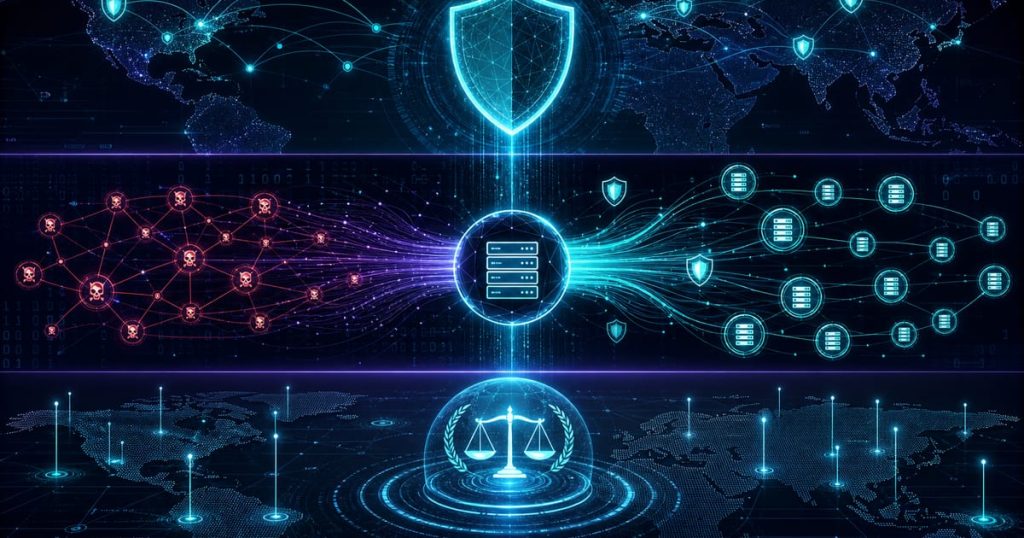
Global Law Enforcement Agencies Collaborate to Dismantle VPN Infrastructure
In a groundbreaking operation, international law enforcement agencies have successfully dismantled a virtual private network (VPN) service that had become a critical tool for over 25 ransomware groups. This unprecedented move marks a significant escalation in the global fight against cybercrime, particularly ransomware, which has plagued organizations worldwide and exacted billions in damages.
The Role of the VPN in Ransomware Operations
The VPN, known as “CyberShield,” served as an anonymous conduit for malicious actors seeking to obfuscate their identities while executing ransomware attacks. By providing a secure communication channel, CyberShield allowed cybercriminals to coordinate attacks, share ransomware payloads, and negotiate ransoms without fear of interception by law enforcement.
According to sources involved in the operation, CyberShield was responsible for facilitating communications for notorious ransomware groups, including REvil, LockBit, and Conti. These groups have been implicated in high-profile attacks against critical infrastructure, healthcare facilities, and major corporations, leading to significant financial and operational disruptions.
Details of the Operation
The takedown operation was a coordinated effort involving multiple law enforcement agencies, including the FBI, Europol, and INTERPOL. It was part of a larger initiative aimed at dismantling the infrastructure that supports ransomware operations. Through a combination of intelligence-sharing, digital forensics, and on-the-ground enforcement, authorities were able to identify the VPN’s operators and seize its infrastructure.
Law enforcement agencies executed simultaneous raids in several countries, targeting data centers and facilities housing the servers used by CyberShield. In addition to the physical infrastructure dismantlement, authorities also confiscated various digital assets, including hard drives and communication devices used by the VPN operators.
The Impact on Ransomware Groups
The dismantling of CyberShield is expected to have a profound impact on ransomware operations globally. Experts warn that the absence of such a robust VPN service may disrupt the operational capabilities of the affected groups, forcing them to seek alternative, less secure communication methods.
Cybersecurity analysts believe that this development could lead to an increase in operational errors among ransomware groups as they transition to new infrastructures. “When criminals lose a secure communication channel, it can lead to increased mistakes that law enforcement can exploit,” stated a senior analyst at a prominent cybersecurity firm. “This could be a turning point in the battle against ransomware.”
The Future of VPN Services in Cybercrime
The takedown raises important questions about the future of VPN services in the context of cybersecurity and cybercrime. While VPNs are legitimate tools used for privacy and security by individuals and businesses, their misuse by cybercriminals creates a challenging dilemma for law enforcement.
Experts emphasize the need for a balanced approach that protects the privacy rights of individuals while also enabling law enforcement to combat cybercrime effectively. “The challenge lies in distinguishing between legitimate users and those who exploit these technologies for malicious purposes,” noted a cybersecurity policy expert.
Continuing the Fight Against Ransomware
As the global landscape evolves, law enforcement agencies are likely to ramp up their efforts against ransomware groups and the infrastructure that supports them. The dismantling of CyberShield serves as a clear message to the cybercriminal community: collaboration among international agencies can yield significant results.
However, experts caution that ransomware groups are highly adaptable and may quickly pivot to new tactics and technologies. “The fight against ransomware is far from over,” warned an FBI spokesperson. “We must remain vigilant and continue to innovate our strategies to counteract emerging threats.” As the dust settles from this operation, the cybersecurity landscape will undoubtedly continue to evolve, demanding constant attention from security professionals and law enforcement alike.